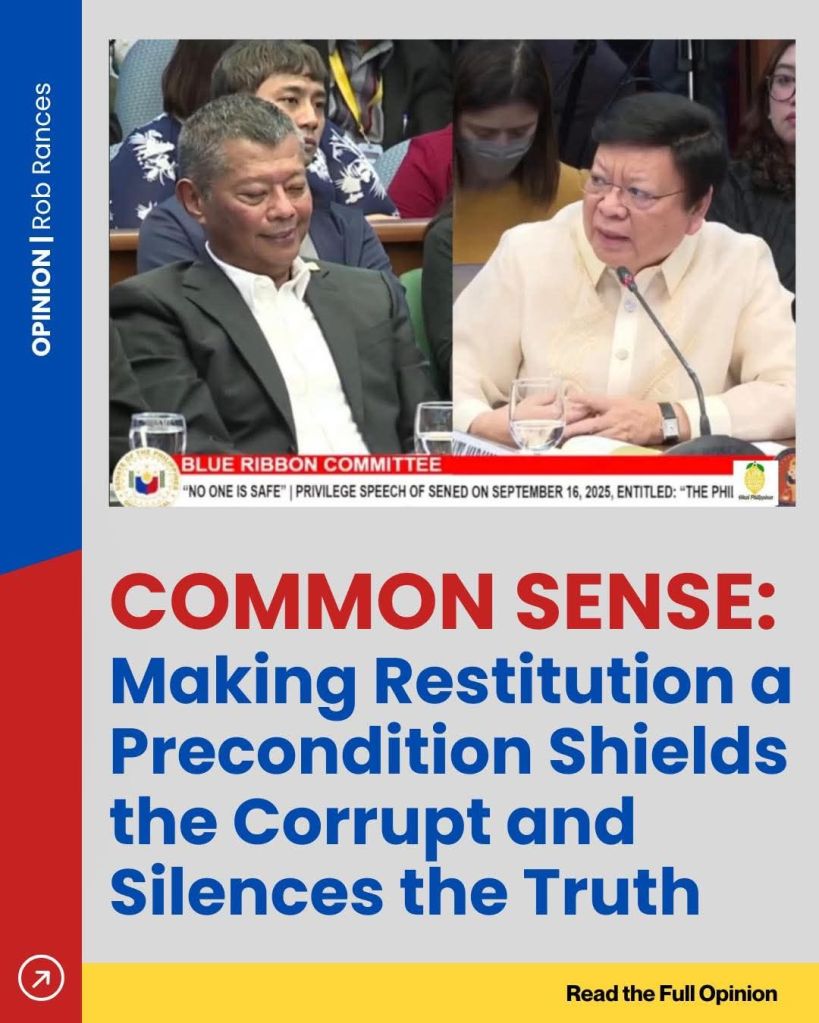
I’m not a lawyer, but I know what makes sense.
If someone is willing to testify against corruption, especially in cases where billions were stolen, the first thing we should do is PROTECT them, not ask them to pay back money right away.
Why?
1. BECAUSE AUDITS TAKE TIME
In cases like ghost projects or flood control scams, it takes months (sometimes years) just for COA to figure out how much was stolen. If we wait for those numbers before giving protection, the witness could already be threatened or killed.
2. BECAUSE THEIR LIFE IS MORE URGENT THAN THE LEDGER
Imagine asking someone to return stolen funds, while the amount is still on a long audit process, before we guarantee their safety. Come on—do you really think the big fish won’t do whatever it takes to stop them from talking? We put their life at risk just to settle the books first? That’s backwards.
3. BECAUSE WITNESS PROTECTION IS A SHIELD
It’s meant to protect those who can help uncover the truth. That’s the whole point.
SOJ Remulla is pushing for something that the courts have never clearly allowed—requiring a witness to pay back stolen money before they can get protection.
But that’s not how most witness protection systems work.
In the U.S. and many other countries, witnesses are protected first, especially if their lives are in danger. Then they cooperate with investigations. Only after that, courts decide on restitution or penalties.
BUT HERE’S WHAT’S EVEN MORE ALARMING:
It appears to me now that requiring restitution up front is being used as a DELAY TACTIC—to stall the testimony of Discaya, who could potentially expose more masterminds of this high-level corruption, while fast-tracking a different witness narrative to shape public opinion.
Yes, it’s more than a bureaucratic delay. It looks like a strategic play to protect masterminds by gagging the one who holds real receipts, while elevating the version that’s politically safe.
LET’S KEEP IT SIMPLE. Common sense says:
• Protect the witness first.
• Let the truth come out—accounting can wait.
• Safety isn’t optional—it’s the government’s job.
If we make whistleblowers wait months just to be “approved,” or force them to return stolen money before they’re even protected, we’re sending one clear message to other witnesses:
“Don’t speak up. It’s not worth it.”
And that kind of system doesn’t just protect the corrupt. It punishes the truth.
•••
OPINION | ROB RANCES
 Pinoy Edmonton News