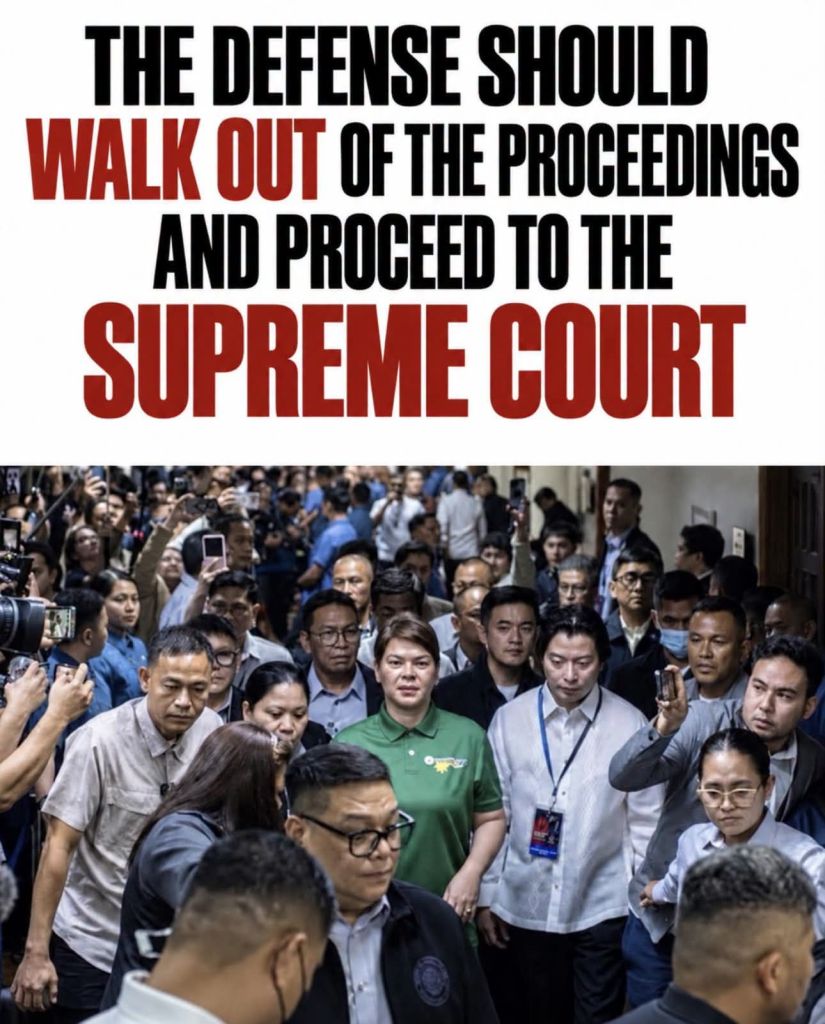
𝗧𝗛𝗘 𝗗𝗘𝗙𝗘𝗡𝗦𝗘 𝗦𝗛𝗢𝗨𝗟𝗗 𝗪𝗔𝗟𝗞 𝗢𝗨𝗧 𝗢𝗙 𝗧𝗛𝗘 𝗣𝗥𝗢𝗖𝗘𝗘𝗗𝗜𝗡𝗚𝗦 𝗔𝗡𝗗 𝗣𝗥𝗢𝗖𝗘𝗘𝗗 𝗧𝗢 𝗧𝗛𝗘 𝗦𝗨𝗣𝗥𝗘𝗠𝗘 𝗖𝗢𝗨𝗥𝗧
𝖡𝗒 𝖠𝗇𝗍𝗁𝗈𝗇𝗒 𝖫𝗎𝖽𝖺𝗅𝗏𝗂 𝖠. 𝖵𝗂𝗌𝗍𝖺
𝗧𝗵𝗲 𝗦𝗲𝗻𝗮𝘁𝗲 𝗖𝗵𝗮𝗻𝗴𝗲𝗱 𝘁𝗵𝗲 𝗡𝘂𝗺𝗯𝗲𝗿 𝗡𝗲𝗲𝗱𝗲𝗱 𝘁𝗼 𝗖𝗼𝗻𝘃𝗶𝗰𝘁
By a vote of 13–1, the Senate impeachment court rejected the earlier ruling that sixteen votes were needed to convict Vice President Sara Duterte. Under its new formula, the Senate will count only those senators who are “legally and factually capable” of participating.
The Senate has not yet decided exactly who will be excluded. It mentioned senators who are detained, suspended, in hiding, seriously ill, beyond its power to compel, or “similarly situated.”
The effect is obvious. If only twenty senators are counted, fourteen votes could convict. The Senate reduced the number being counted. By reducing that number, it also reduced the number of votes required for conviction.
𝗧𝗵𝗲 𝗖𝗼𝗻𝘀𝘁𝗶𝘁𝘂𝘁𝗶𝗼𝗻 𝗦𝗮𝘆𝘀 “𝗔𝗹𝗹”
Article XI, Section 3(6) states:
“No person shall be convicted without the concurrence of two-thirds of all the Members of the Senate.”
The controlling word is “all.”
The Constitution does not say “all senators capable of participating.” It does not say “all senators who are available.” It does not say “all senators who are present.” It does not say “all senators whom the Senate can compel to attend.”
A detained senator remains a senator. An absent senator remains a senator. A suspended senator remains a senator. A sick senator remains a senator. A senator in hiding also remains a senator. Their situations may prevent them from voting. Those situations do not remove them from office or make their seats vacant.
The Senate confused the ability to vote with membership in the Senate. These are different matters. A senator may be unable to vote on a particular day and still remain one of the members counted under the Constitution.
𝗧𝗵𝗲 𝗦𝗲𝗻𝗮𝘁𝗲 𝗔𝗱𝗱𝗲𝗱 𝗪𝗼𝗿𝗱𝘀 𝗧𝗵𝗮𝘁 𝗗𝗼 𝗡𝗼𝘁 𝗘𝘅𝗶𝘀𝘁
The phrase “legally and factually capable of participating” does not appear in Article XI, Section 3(6). The Senate placed that qualification into the Constitution through a vote.
That is not a minor procedural ruling. It changes the constitutional requirement for conviction.
The Constitution fixes the rule. Conviction requires the agreement of two-thirds of all the Members of the Senate. The Senate may adopt rules for conducting the trial. It cannot use those rules to replace the constitutional denominator.
Thirteen senator-judges may overturn a ruling of the presiding officer. They cannot overturn the Constitution. They also cannot amend it by passing a resolution during an impeachment trial.
𝗧𝗵𝗶𝘀 𝗜𝘀 𝗡𝗼 𝗟𝗼𝗻𝗴𝗲𝗿 𝗮 𝗠𝗲𝗿𝗲 𝗦𝗲𝗻𝗮𝘁𝗲 𝗗𝗶𝘀𝗮𝗴𝗿𝗲𝗲𝗺𝗲𝗻𝘁
The Senate will decide which senators are “capable” of participating. It will remove the others from the count. It will then use that reduced count to determine whether the Vice President has been convicted.
The same body that wants to use the new formula will decide who belongs in its denominator. The number required for conviction could therefore change according to classifications created by the impeachment court itself.
This affects the most important safeguard given to the respondent: the number of votes required to remove her from office and possibly disqualify her from holding public office again.
The defence cannot obtain an impartial and final answer from the same body that adopted the disputed formula. The constitutional dispute has already become real. The defence should bring it to the Supreme Court immediately.
𝗧𝗵𝗲 𝗦𝘂𝗽𝗿𝗲𝗺𝗲 𝗖𝗼𝘂𝗿𝘁 𝗠𝘂𝘀𝘁 𝗦𝗲𝘁𝘁𝗹𝗲 𝘁𝗵𝗲 𝗜𝘀𝘀𝘂𝗲
The Senate has the sole power to try and decide impeachment cases. That power comes from the Constitution and must remain within constitutional limits.
Article VIII, Section 1 gives the courts the duty to determine whether any branch or instrumentality of government committed grave abuse of discretion amounting to lack or excess of jurisdiction. That duty includes reviewing acts of the Senate when a clear constitutional limit is involved.
The Supreme Court does not have to decide whether Sara Duterte is guilty. The immediate question is narrower: May the Senate replace “all the Members of the Senate” with “members legally and factually capable of participating”?
That is a constitutional question. The Senate cannot give the final answer to a dispute involving the limits of its own power. The Supreme Court must decide whether the Senate crossed those limits.
𝗧𝗵𝗲 𝗗𝗲𝗳𝗲𝗻𝘀𝗲 𝗦𝗵𝗼𝘂𝗹𝗱 𝗪𝗮𝗹𝗸 𝗢𝘂𝘁
The defence should place its objection clearly on the record. It should obtain the official ruling, the transcript, and the record of the vote. It should then file a petition for certiorari and prohibition under Rule 65.
The petition should ask the Supreme Court to strike down the new formula and stop the Senate from applying it. The defence should also seek a temporary restraining order while the petition is being heard.
The defence should cease participating in the merits of the trial until the Supreme Court settles the constitutional issue. Participation should continue only ad cautelam—for receiving notices, preserving objections, and protecting the Vice President’s rights. This prevents any claim that the defence abandoned the case.
The walkout must therefore have a clear legal purpose. The defence should leave the trial proceedings and proceed directly to the Supreme Court.
𝗧𝗵𝗲 𝗦𝗲𝗻𝗮𝘁𝗲 𝗖𝗮𝗻𝗻𝗼𝘁 𝗥𝗲𝘄𝗿𝗶𝘁𝗲 𝘁𝗵𝗲 𝗖𝗼𝗻𝘀𝘁𝗶𝘁𝘂𝘁𝗶𝗼𝗻
The Constitution says “all the Members of the Senate.” Those words remain in force.
The Senate cannot erase members from the count simply because they are unable to participate. Only the lawful loss of Senate membership or an actual vacancy can reduce the number of members. Detention, suspension, illness, hiding, and absence do not automatically create vacancies.
The Senate cannot obtain through thirteen votes what requires a constitutional amendment. If it believes the rule should cover only participating senators, the proper remedy is to amend the Constitution through the process required by Article XVII and submit the amendment to the Filipino people for ratification.
Until then, the Senate must follow the Constitution as written. The defence should refuse to proceed under a formula created during the trial. It should go to the Supreme Court and demand enforcement of the word “all.”

